
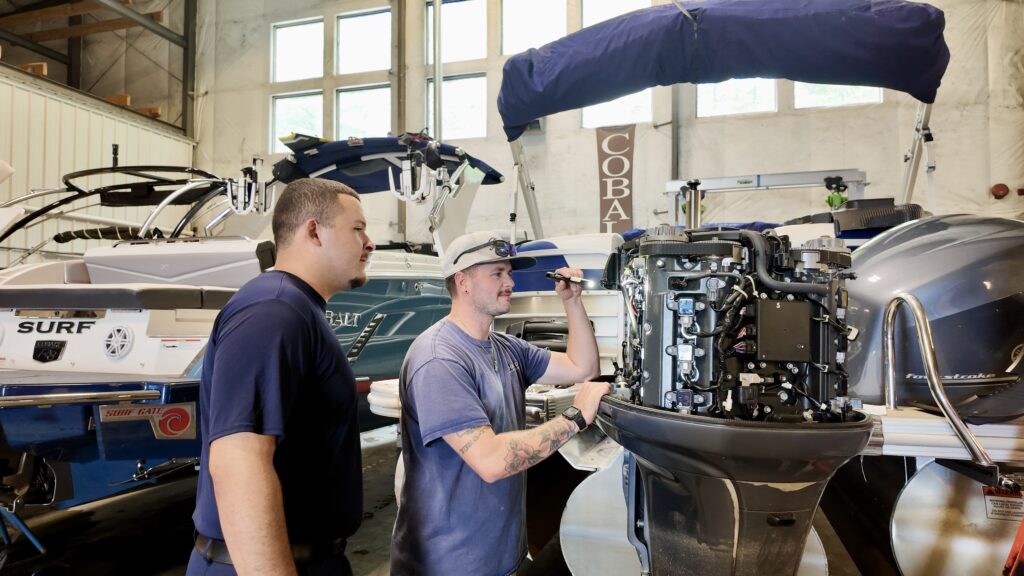
The docks are quieting down, and that last cruise always comes too soon. Before the first hard freeze, the most important job left is winterizing your boat, so launch day next spring is about getting back on the water, not chasing repairs.
Quick answer: To winterize a boat, stabilize the fuel, change the oil, protect the engine with antifreeze, change the gear oil, drain all water systems, charge and disconnect the battery, and clean and dry the interior. Then store it indoors or shrink-wrapped outdoors. In New Hampshire and Maine, finish before the first hard freeze, usually in October or early November.
Why Do You Need to Winterize Your Boat?
Water expands when it freezes, so any left in your engine, cooling system, or plumbing can crack metal and split hoses. Untreated fuel breaks down over the winter, batteries drain, and interiors collect mildew. These problems are costly and usually aren’t found until spring.
How to Winterize a Boat: Step-by-Step Checklist
Always follow your owner’s manual, but most boats need these essentials:
- Stabilize the fuel. Add fuel stabilizer, then run the engine for a few minutes so it reaches the whole system. Most manufacturers recommend storing with a nearly full tank to limit condensation.
- Change the oil and filter. Used oil holds acids and moisture that can wear internal parts over the winter.
- Protect the engine from freezing. Drain the cooling system or run marine antifreeze through it, depending on your engine type.
- Check the lower unit or drive. Change the gear oil and look for milky oil, which can mean water got in.
- Drain the water systems. Empty freshwater tanks, sinks, showers, and livewells, then add non-toxic antifreeze where your manual calls for it.
- Care for the battery. Fully charge it, disconnect it, and keep it on a maintenance charger or in a cool, dry place.
- Clean and dry the interior. Wipe down upholstery, remove cushions if you can, and take out electronics, life jackets, and anything that holds moisture.
- Wash and inspect the hull. A clean hull makes it easier to spot dings, scratches, or damage that should be fixed before spring.
Where Should You Store Your Boat for the Winter?
Once your boat is winterized, most owners choose between two storage options.
| Option | Best for | Keep in mind |
|---|---|---|
| Indoor storage | Maximum protection from snow, ice, sun, and wildlife | Space fills up fast, so reserve early |
| Outdoor storage with shrink-wrap | Owners who want solid protection at a lower cost | Wrap must be tight and vented to prevent mildew |
Either way, make sure your boat is fully supported, covered, and checked on through the season.
When Should You Winterize Your Boat in New Hampshire and Maine?
Before the first hard freeze. On lakes like Winnipesaukee and Sebago, one cold night is enough to cause damage, and fall is the busiest time for service, so book your appointment early.
Should You Winterize Your Boat Yourself or Hire a Pro?
You can winterize yourself with the right tools and manual, but one missed step can mean a costly repair, and modern engines have manufacturer-specific procedures.
Our service team knows the brands we sell inside and out. We’ll winterize, store, and prep your boat for spring, so all you have to do is show up on launch day.
Enjoy the water. We’ll handle the details. Schedule your winterization and storage with Goodhue Boat Company today.
Boat Winterization FAQs
How much does it cost to winterize a boat? Cost depends on the size of your boat, the engine type, and the services you need. Reach out to our service team for a quote on your specific boat.
Can I winterize a pontoon the same way as a bowrider? The basics are the same, but pontoons and tritoons often have fewer water systems and more upholstery to protect. Engine steps depend on your outboard.
What happens if you don’t winterize your boat? Freezing water can crack the engine block, damage the cooling system, and split hoses, and stale fuel can clog the fuel system. These repairs often cost far more than winterizing.
What if I’m thinking about a new boat? Winter is a great time to plan your next one. Ask us about trading in your boat this fall so you’re ready for spring.